Three.js Learning: Building Interactive 3D Experiences
learning
stack: [three.js, webgl, learning]
Context
This project marks my learning stage with Bruno Simon's Three.js Journey, where I focused on understanding real-time 3D workflows for the web through practical scene building.
My role
- Frontend development
- 3D modeling
I designed and developed the interactive prototypes, combining Three.js implementation with scene setup and frontend integration.
Data and methodology
I built multiple exercises and prototypes to practice cameras, materials, lights, and interactions in a browser-based 3D environment.
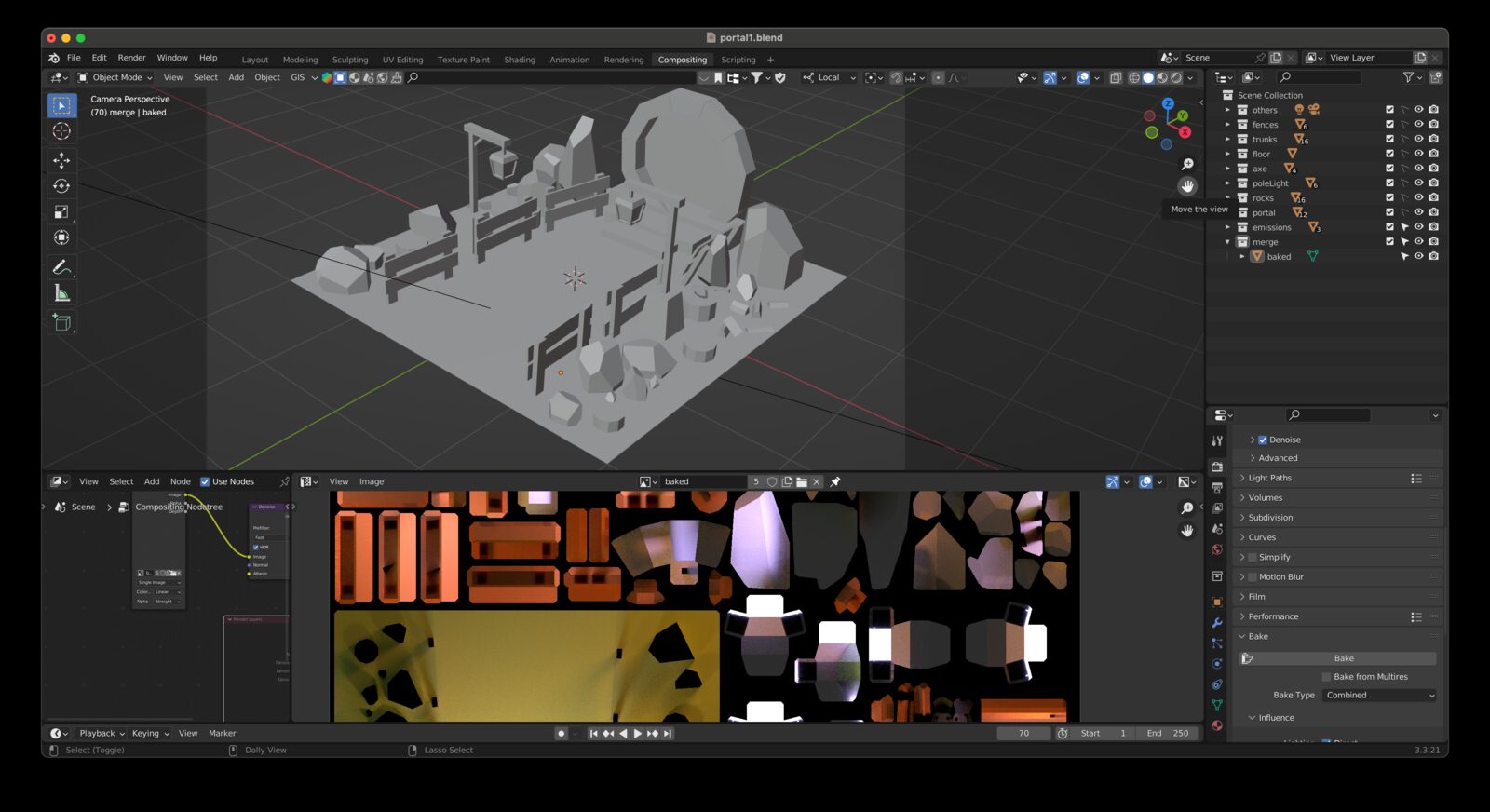
For the portal prototype, I used Blender to model all scene elements before integrating them into Three.js.
Key decisions
- I kept the scope focused on learning-by-building, prioritizing fast iteration over production polish.
- The farm prototype was prepared as an initial concept for a larger piece that was not ultimately published.
Result
The process produced two functional interactive prototypes and a solid technical foundation in Three.js and WebGL workflows.
Impact and learnings
- This learning phase expanded my frontend capabilities into real-time 3D and opened new possibilities for future visual storytelling formats.