From war to your home: how conflict scrap feeds steel
Context
This cross-border investigation tracks how scrap metal from war zones in Syria, Libya, and Ukraine moves into Turkish steel production and returns to Europe as finished products. My work focused on the geospatial narrative: linking ports, shipping routes, and trade records in a clear visual structure that made a complex supply chain legible without losing evidentiary rigor.
My role
- Cartography
- Data analysis
- Frontend development
I led the geospatial narrative and visual implementation, connecting ports, shipping routes, and trade records in a structure that made a complex supply chain readable without losing evidentiary rigor.
Data and methodology
The project was built in close collaboration with correspondent Andrés Mourenza, combining reporting material, trade records on scrap imports and exports, and iterative editorial design to define the narrative flow.
We used map-based storytelling to move from concrete route evidence to broader systemic patterns, linking specific vessel movements with institutional trade dynamics.
Key decisions
- We chose a scrollytelling structure with Mapbox to guide readers through locations and evidence in a controlled sequence.
- We used the Nezha route between Benghazi and Iskenderun as a narrative anchor to introduce the core mechanism of the investigation.
- For the trade-flow section, I implemented WebGL and custom shaders to represent cross-border scrap movements with higher visual density and clarity.
Result
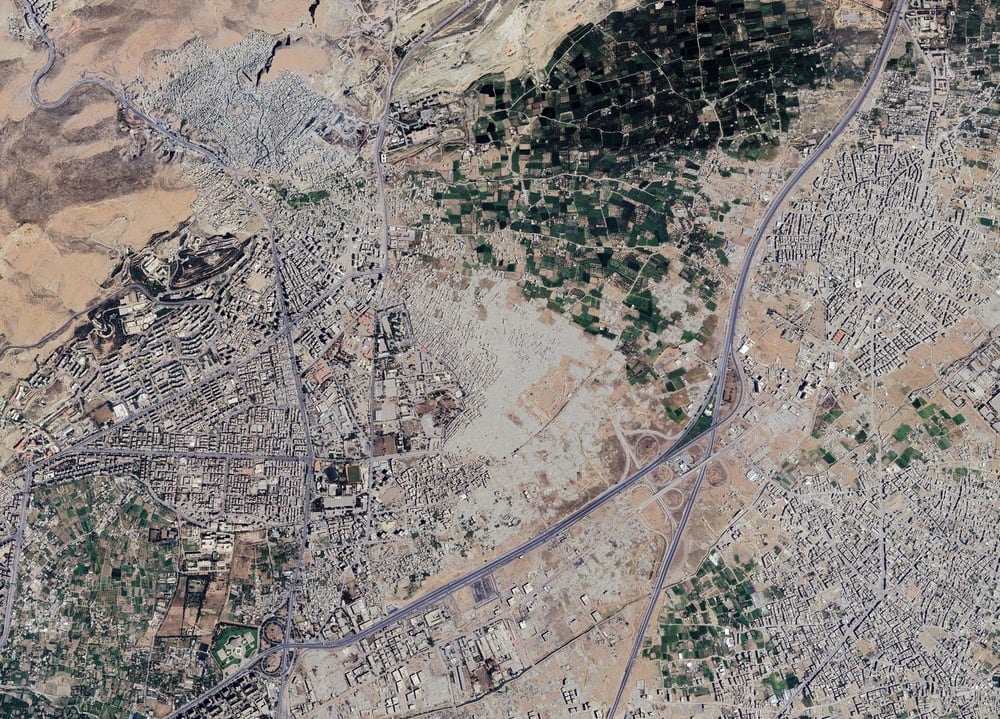
The final piece combined multiple interactive layers: an opening scrollytelling map, a second flow visualization of imports and exports, an interactive timeline on the destruction of a Damascus neighborhood, and an annotated document showing how the scrap system was institutionalized under Bashar al-Assad's regime.
Impact and learnings
- The project aligned with a quality-first investigative approach focused on public-interest reporting and accountability, and it performed well for this type of in-depth piece.
- It reinforced a collaboration model between reporting and geospatial storytelling that we can reuse in future cross-border investigations.